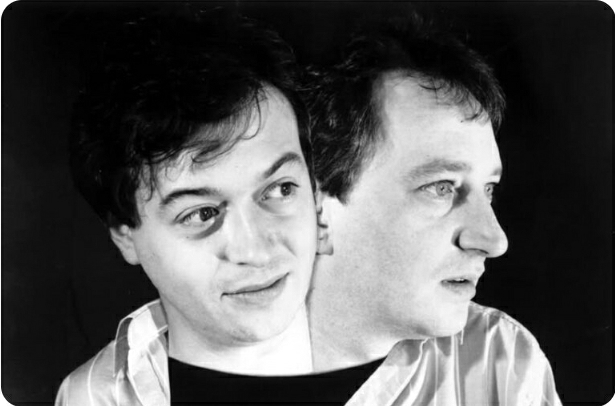
In Loving Memory of Rob Grant
I was heartbroken to hear of the death of Rob Grant, co-creator of Red Dwarf. It is difficult to process the loss of someone who shaped so much of my life, both personally and professionally. Grief has a strange way of folding time in on itself; memories that feel distant suddenly become vivid again, as if they happened only yesterday.
Rob and I first met at the age of nine. We were pupils at Chetham’s School of Music, two boys who were meant to be studying music but were far more interested in spotting the absurdities in everyday life. Even then, before ambition had formed or careers had been imagined, we discovered a shared instinct: we simply tried to make each other laugh. That was the beginning of everything.
Our friendship deepened over the years, and we later studied together at the University of Liverpool. By then, the mischief of childhood had matured into something more focused. We were still chasing laughter, but we had begun to understand the craft behind it — the rhythm of dialogue, the architecture of a joke, the delicate balance between character and comedy. What started as scribbles in notebooks and late-night conversations slowly evolved into scripts, sketches, and a creative partnership that would define our futures.
Long before there was any talk of television or audiences, we wrote for ourselves. We wrote because it delighted us. Because the process of turning an idea inside out until it sparked with absurdity felt like magic. Because we trusted each other’s instincts. The laughter was always the compass.
When our partnership eventually found its way onto television screens, neither of us could have imagined how far it would travel. What began as two friends amusing one another grew into something that resonated with millions. To audiences, it became iconic; to us, it was still rooted in that same dynamic — a shared glance, a sharpened line, the quiet satisfaction of knowing we had pushed an idea just far enough.
Rob possessed a rare comedic voice — sharp, fearless, and gloriously unpretentious. He had an instinct for exposing the ridiculous in the ordinary, and for grounding even the most outlandish concepts in recognisable human flaws. He cared deeply about structure and integrity. A joke was never just a joke; it had to serve the story, reveal character, or turn expectation on its head. Working with him meant constant refinement. He challenged me, strengthened me, and never allowed complacency to creep in.
But beyond the work, beyond the scripts and the success, there was the friendship. The schoolboy who laughed at the same silly ideas. The young man who debated plot points into the early hours. The collaborator who knew exactly when to push, when to concede, and when to sit back and let the absurdity speak for itself. Ours was a bond measured not just in professional milestones, but in shared decades of creativity and trust.
It is a strange and heavy thing to lose someone who has been present in your life for so long. There are memories that belong only to us — half-formed concepts, abandoned drafts, private jokes that would make no sense to anyone else. With his passing, those fragments feel even more precious.
And yet, his voice endures. It lives on in the work, in the characters who continue to make people laugh, and in the countless fans who still find joy and comfort in stories we built together. That is an extraordinary legacy — to have created something that not only entertained, but endured.
What began as schoolboy mischief grew into a lifelong creative partnership. I will forever be grateful for the laughter we shared, the risks we took, and the world we created side by side.
Farewell, my dear friend. Thank you for everything. The laughter you gave the world — and the laughter you gave me — will never fade.
Leave a Reply